Loading 3D model...
Controls
About the Remora
The remora, often called the "hitchhiker" of the ocean, can grow up to 90 centimeters in length. With its remarkable suction disc, specially evolved from a dorsal fin, it clings effortlessly to the mighty bodies of sharks. More than one may accompany a single host, fastening themselves securely as their vessel glides across the vast blue. Together, shark and remora traverse thousands of kilometers across the open ocean — a partnership forged in the deep currents of survival and opportunity.
By borrowing nature’s elegant solution, our tag rides with the shark comfortably and unobtrusively, turning a biological partnership into a durable engineering approach.
Key Features
Unlike traditional shark tags, which often last no longer than a year, this biomimetic tag draws its energy directly from the motion of the shark — powered by advanced piezoelectric fibers. As long as the shark lives and swims, the tag endures, extending observation far beyond conventional limits.
Traditional satellite tags struggle to return data in real time. But this new generation of shark tag does more. It can sense what these ocean giants are eating, and transmit that knowledge instantly back to researchers. For the first time, we gain not just glimpses, but a living, continuous stream of intelligence — enabling the creation of predictive models of marine behavior.
Key Components Overview
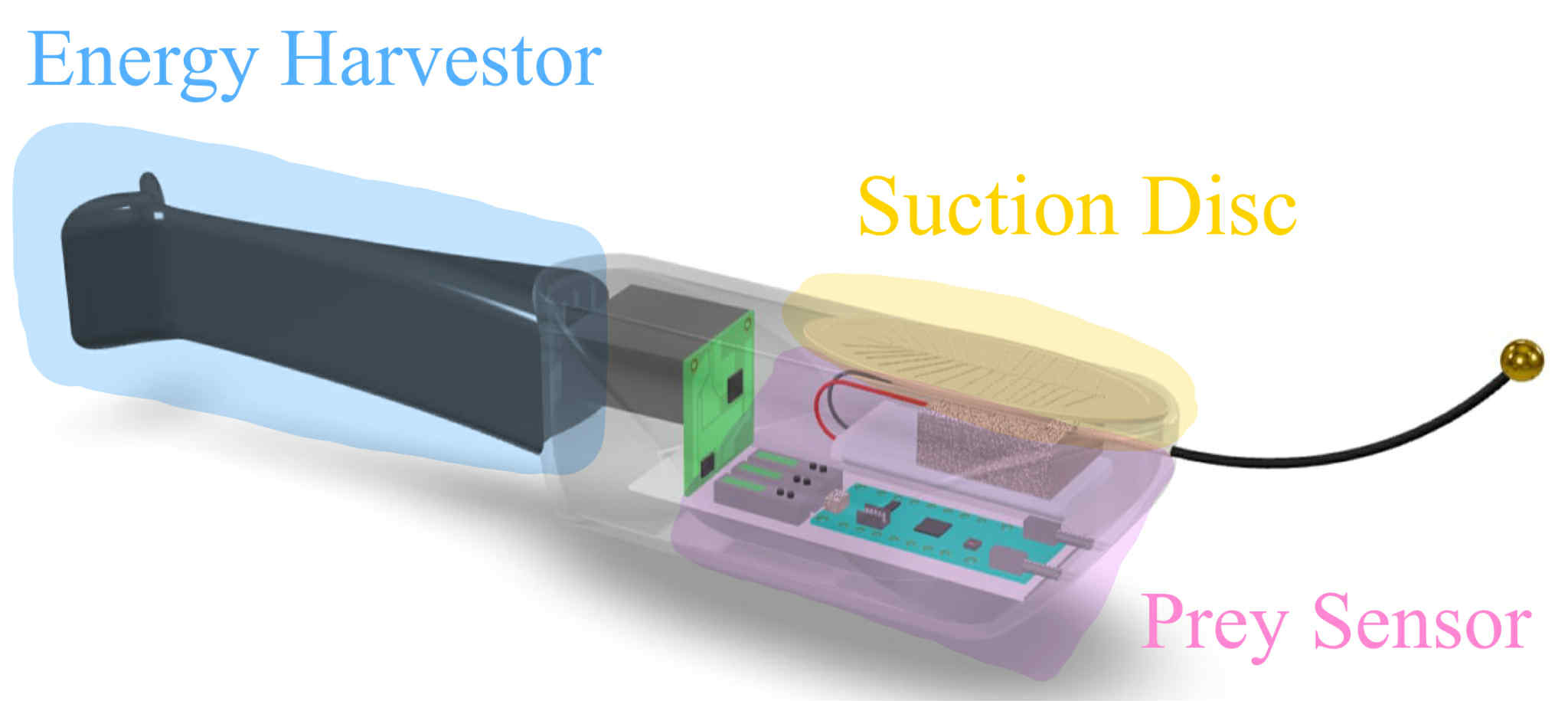
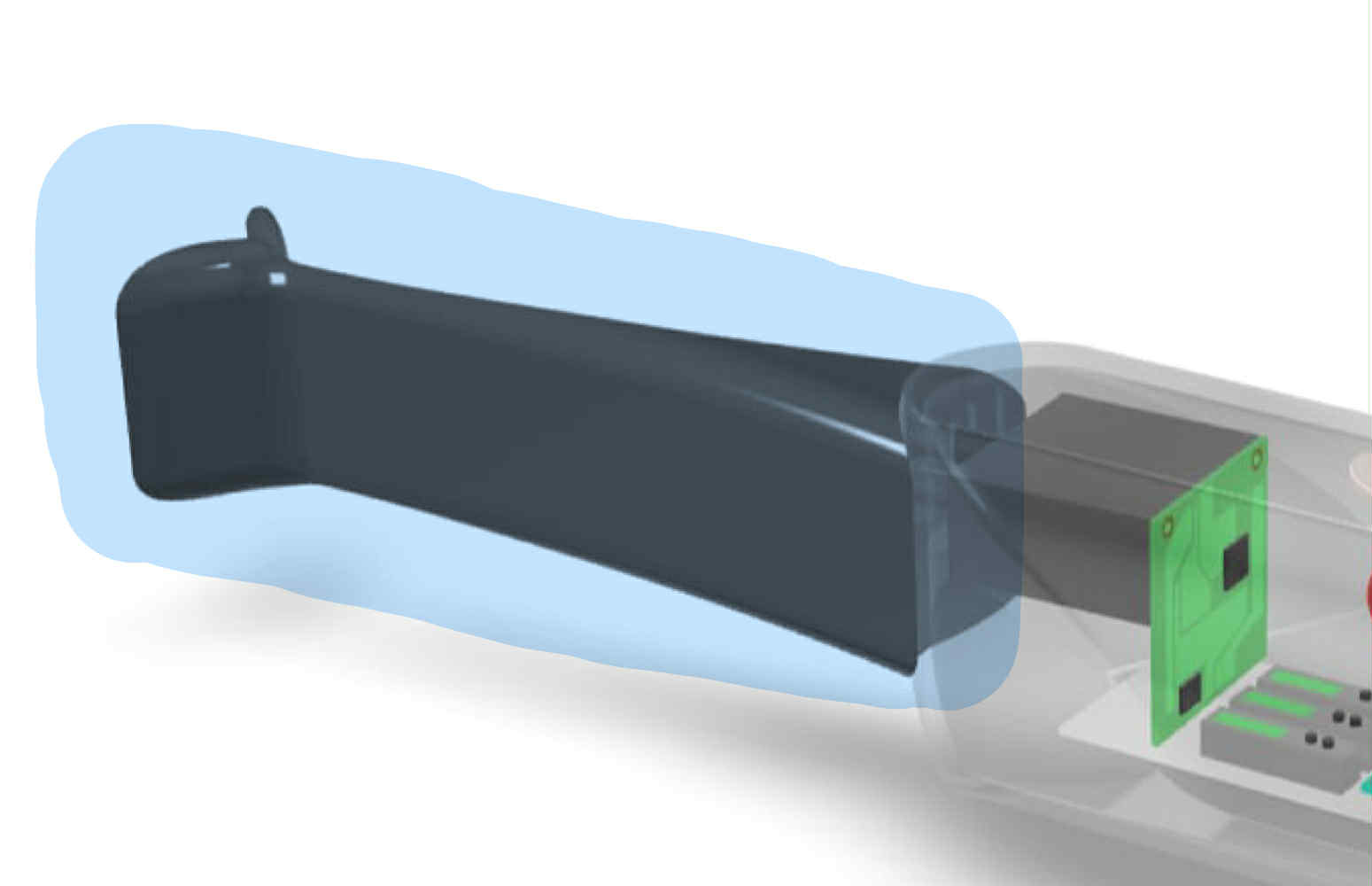
1. Energy Harvester
Motion to Energy -- Turning a shark's swim into power.
At the rear of the tag, slender piezoelectric fibers bend with the flow—like a remora's tail flexing in the current. Each tiny vibration becomes electricity. Unlike traditional tags that fade within a year, this biomimetic design feeds on motion: as long as the shark swims, the tag keeps working, extending our watch far beyond old limits.
In tests on live fish, the harvester produced ~80 μW, enough to power up light a blue LED—proof that life in motion can power science.
In comparison with battery tags, this approach can support longer studies and more data over time.
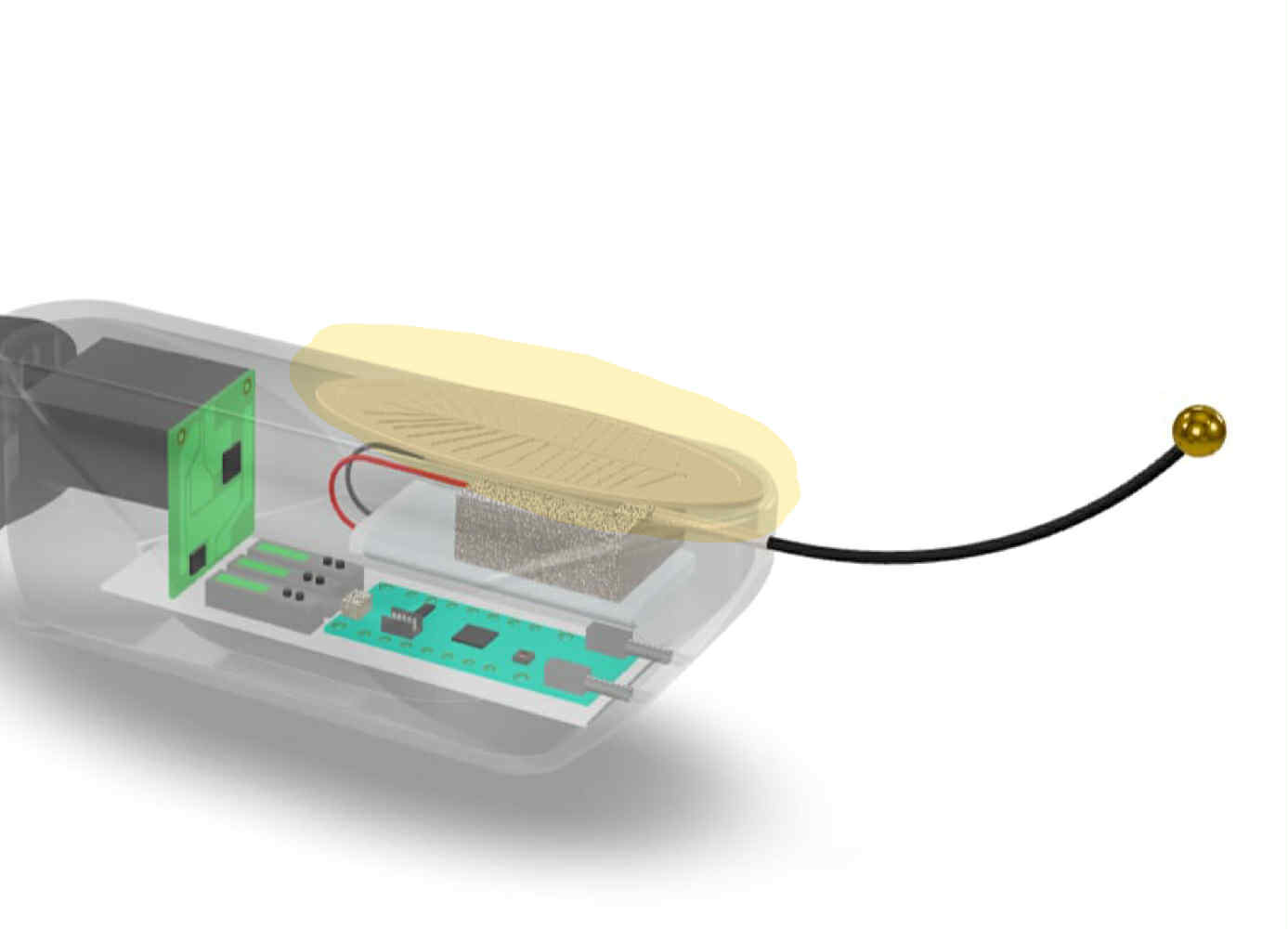
2. Suction Disc
A Gentle Hold to the Shark -- Non-invasive Mount
Secure attachment, minimal drag, no piercing.
Inspired by remoras and modern suction-cup wildlife tags, the mount grips the skin without injury. It rides quietly with the animal across long distances, staying low-profile to reduce drag—built to endure real ocean travel while keeping the host unharmed.
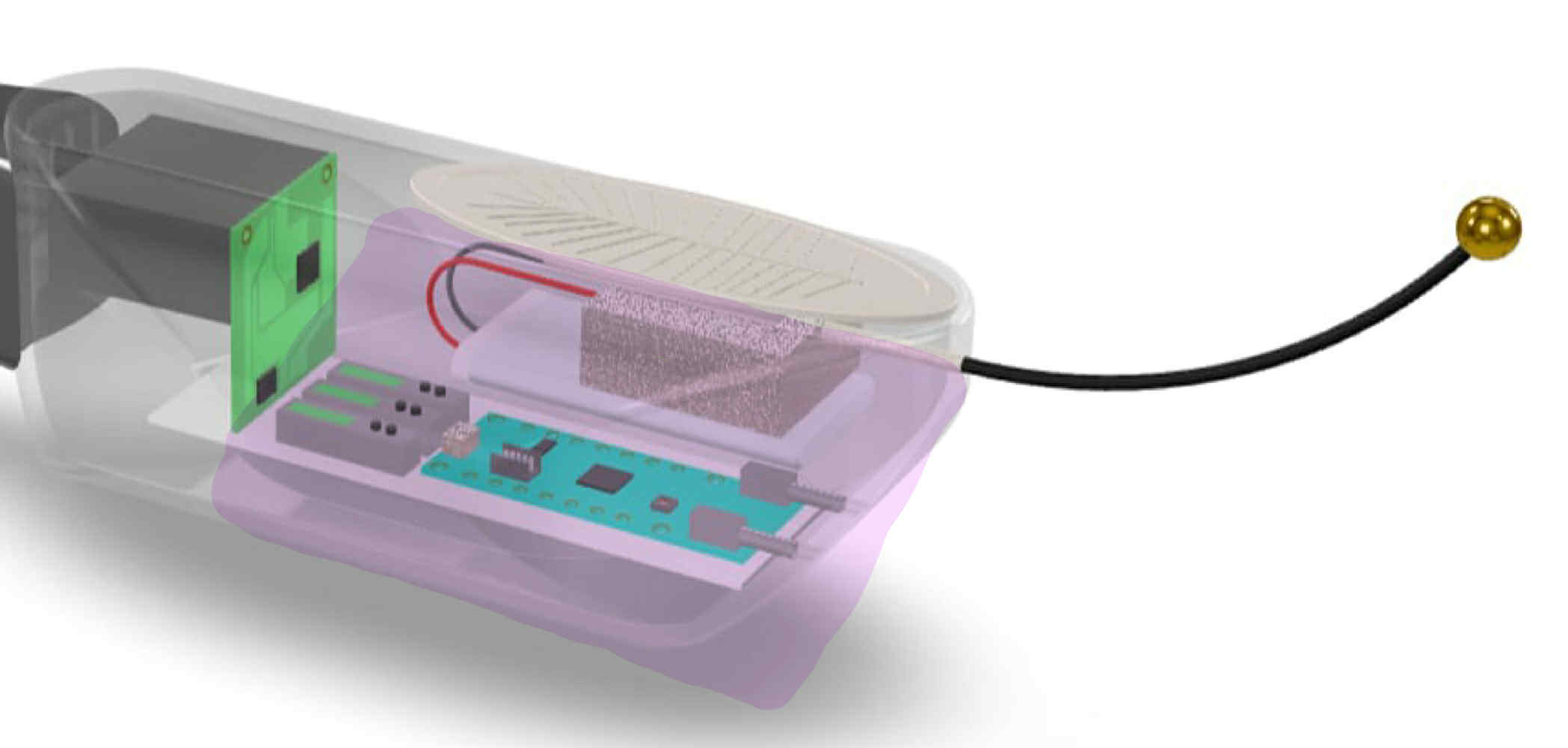
3. Prey Sensor
Revealing the Hunt
Sensors wake when a predator moves.
A small network listens for the signs of feeding and switches on only when it matters:
- IMU / accelerometer: bursts of speed, rolls, lunges.
- Pressure sensor: depth changes before and after the strike.
- Magnetometer: heading and orientation for sensor fusion.
- Hydrophone (passive acoustics): the scatter of prey, jaw impacts, tearing sounds, social calls.
When these cues align, a miniature camera activates—capturing short, high-value clips around the feeding moment so we can tell what the shark is eating, not just where it swims.